How to increase repeat purchases on a Shopify store in 2026?
After checking queries of Shopify merchants on various portals and communities and communicating with 50 Shopify merchants, the number one thing they are looking for is “How to increase repeat purchases on a Shopify store?”.
Repeat purchase rate is an important metric for any e-commerce business that is looking to build sustainable growth. In simple words, “repeat purchase” means the customer purchasing again from your store after the initial purchase.
It is far easier to get orders from existing customers as compared to orders from new customers.
4 reasons repeat purchases are profitable
1. Predictable revenue
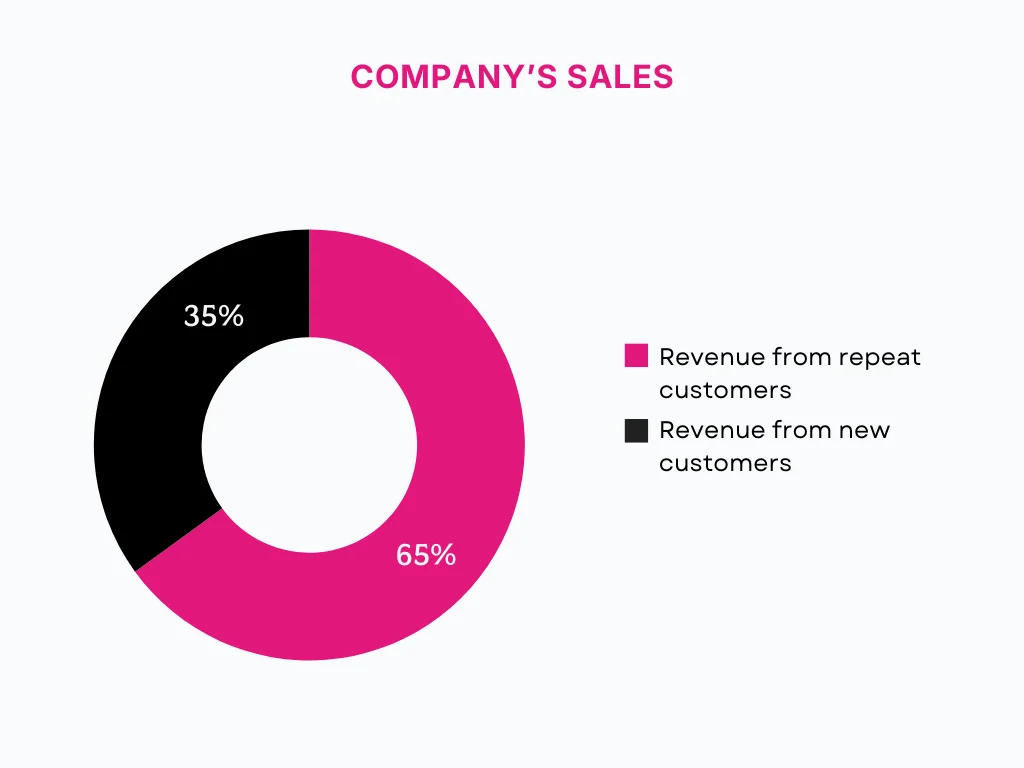
65% of a company’s sales are generated by repeat customers. Not only this, Repeat customers spend 67% more than new customers on average and still most brands usually focus on getting new customers.
2. Referrals
Customers making repeat purchases often become brand ambassadors of your Shopify brand, and that too free of cost. They refer their friends and referrals, and you see an increase in your sales via word-of-mouth marketing, which is really great for your Shopify brand.
3. Less price-based friction
When a customer has already purchased from your Shopify store, they don’t hesitate on the price next time when they want to purchase, as they already had a shopping experience with your brand. Not only this, existing customers are 50% more likely to try your brand’s new product and 31% more likely to spend more on their average order value than new customers. They know your brand, so friction is lower.
4. Better customer lifetime value (CLV)
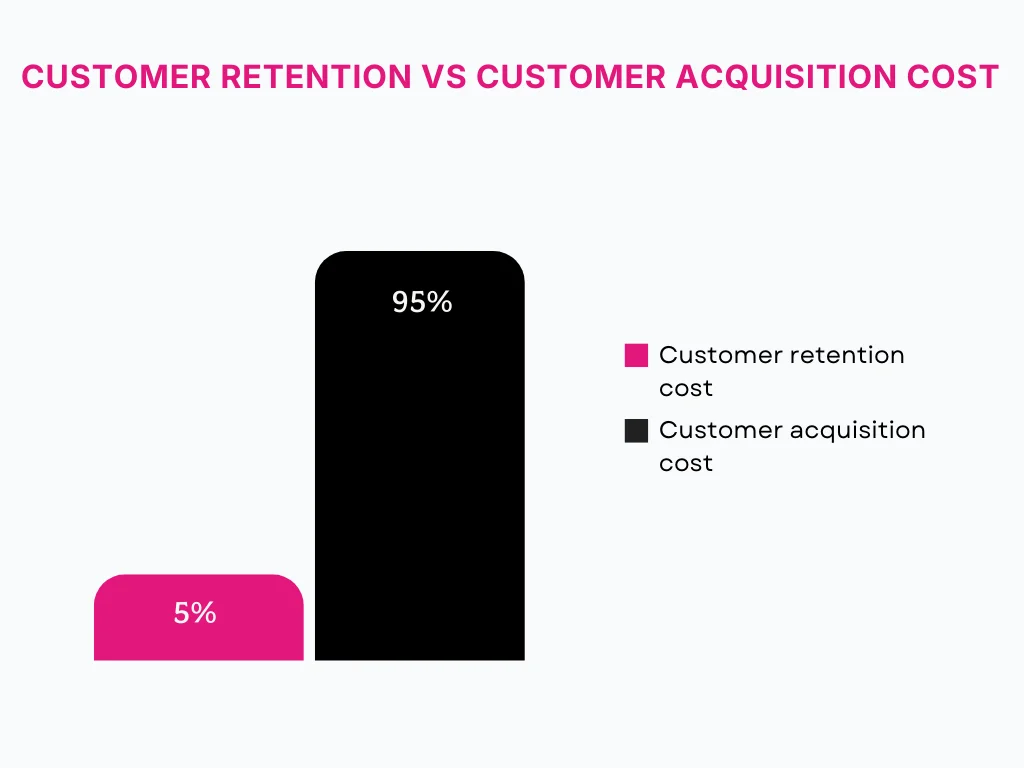
Acquiring a new customer (CAC) is 5 to 25 times more costly than retaining the existing customer. The good news is that increasing customer retention by just 5% can result in a 25-95% increase in overall profits; this is compounding in action. Small efforts in customer retention can result in huge results, compounded over time.
“Retention is about revenue. Sure, you could think about acquisition when you think about revenue. ‘How do we bring more customers in to combat the customers we’re losing?’ And you’re right, that’s a piece of the puzzle. But if you only focus on getting new customers, giving little thought to the ones you’ve already attracted, you’re missing a giant piece of the puzzle. More DTC brands could benefit from putting as much focus on retention as they do on new customer acquisition.
— Val Geisler, Customer Advocacy Lead at Klaviyo
What is the average repeat purchase rate on Shopify?
As of 2026, the average repeat purchase rate on Shopify is 28%, however, this differs based on different industry. If your Shopify store’s repeat purchase rate is less than 20%, then it can be improved with strategies that we will be discussing in a minute.
If your Shopify store’s repeat purchase rate is between 20-40% or more than 40%, then your brand is doing quite well, but there is always a scope to improve :)
Repeat purchase rate of various industries
| Industry | Repeat Customer Rate | Key Driver |
|---|---|---|
| Grocery & Food Delivery | 40%+ | Weekly replenishment cycle |
| Pet Supplies | 30–40%+ | Autoship subscriptions, brand loyalty |
| Health & Supplements | ~29% | Consumable products, auto-refill |
| Fashion & Apparel | 20–26% | Seasonal buying, style loyalty |
| Beauty & Cosmetics | ~21–26% | Replenishment cycles, deal-hunting |
| Sporting Goods & Outdoor | ~21% | Mix of consumables and durables |
| Electronics & Tech | ~18% | Long product lifecycles |
| Home & Furniture | ~15% | Infrequent, high-ticket purchases |
| Luxury Goods & Jewelry | ~10% | High price points, long consideration |
Note: these numbers are based on data mentioned in globenewswire and opensend
How to calculate repeat purchase rate
Let’s say 1000 customers ordered from your Shopify store in 2025. Of these, 250 customers placed a second order.
Formula: (number of customers who have placed orders more than once / total number of customers) * 100
Repeat purchase rate = (250 / 1000) * 100 = 25
The repeat purchase rate was 25% in 2025.
9 proven ways to improve repeat purchases
- Loyalty program
- Discounts & free shipping
- Make reordering effortless
- Remove the friction of subscription
- Personalization
- Smooth checkout experience
- Order edits and stress-free returns
- Leverage the post-purchase phase
- Build a brand with meaning beyond sales revenue
Loyalty program
83% of consumers say loyalty programs influence their decision to continue shopping with brands.
- 90% of the loyalty programs give positive ROI if executed properly. Not only this, successfully executed loyalty programs generate 4.9x more revenue than they cost.
- Based on survey by smile.io, loyalty program participants have 72% higher repeat purchase as compared to non-participants
These numbers clearly indicate something that is obvious.
Discounts & free shipping
Who doesn’t like discounts? Many Shopify stores give discounts to first-time buyers, which is a good way to acquire new customers and drive sales. However, giving discounts to existing customers is also important, and it doesn’t only help you increase repeat purchase rate, but discounts especially designed for your customers, for example, a discount code that starts with the customer’s first name, build a long-lasting relationship with customers.
-
Apart from discounts, free shipping increases repeat purchases by 20%, and most customers do expect free shipping.
-
Additionally, giving a free gift or free sample based on total order value is a good way to retain a customer.
Make reordering effortless
77% of the repeat customers buy the same products again, and only 23% of them buy new products. Grocery, food and beverage, pet supplies, health and supplement products, personal care products, and other industries with consumable products have customers that purchase the same products most of the time, and this emphasises the importance of making the reorder process effortless and quick.
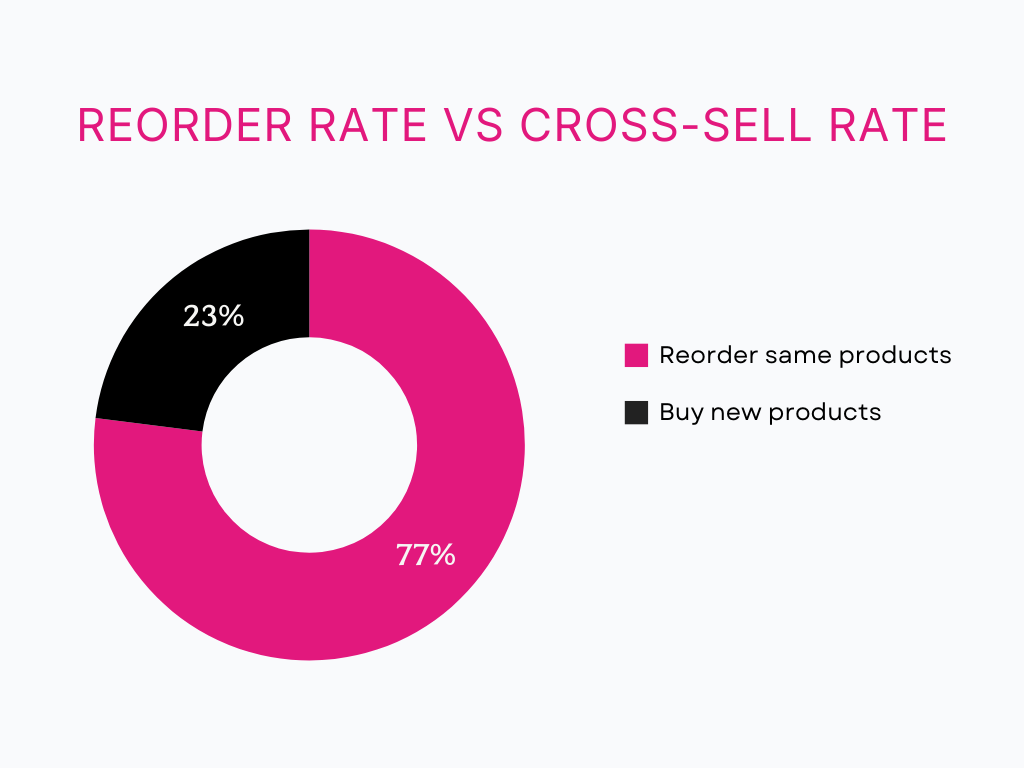
- If your store has a product recommendation block such as “customers also bought this” or “you may like this”, then that block is targeting only 23%, but what about the other 77%? Those customers are looking to buy the same products again, and for them, you can replace the product recommendations block with a personalized “previously bought by you” or “buy again” block that shows customers exactly what they have purchased before.
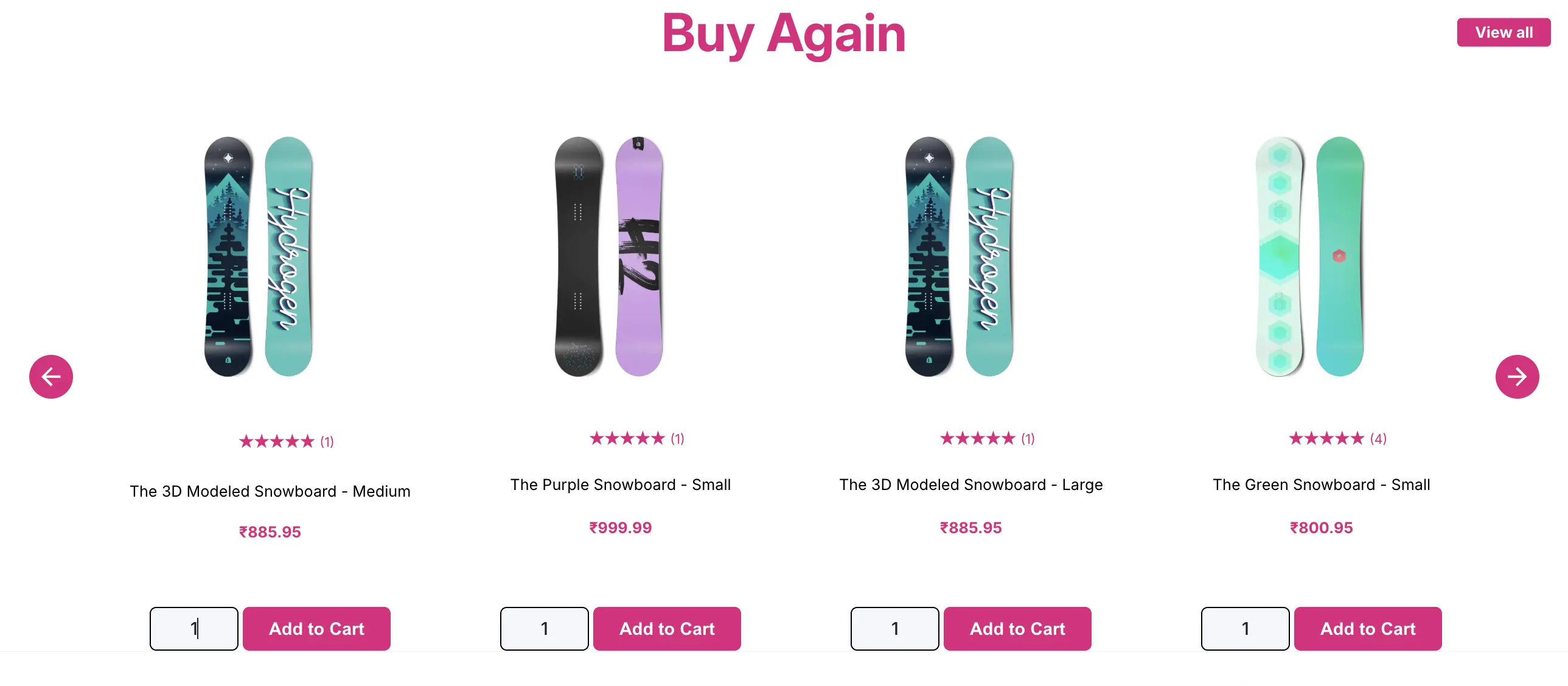
- Wholesale Supplies Plus is a Shopify Plus store specialising in soap-making, candle-making, additives, fragrance oils, and related products. Since most of their customers are repeat buyers, they wanted to make reordering quick and effortless. To do this, they added the Buy Again & Reorder Reminder app to their store and saw positive results within just a few days.
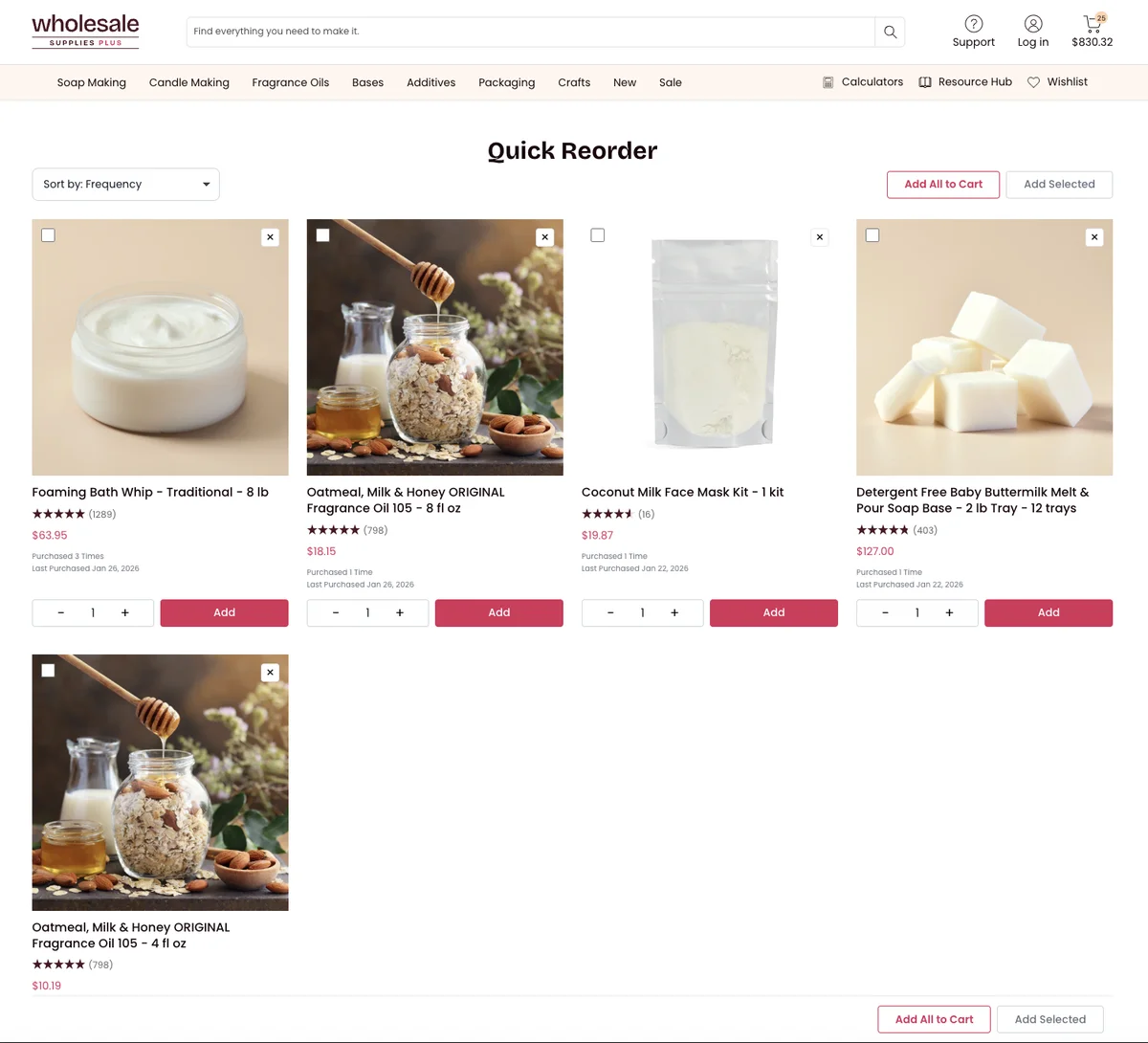
If your store has consumable products and if your repeat purchase is less than 25%, then you should put some effort into reducing reorder friction and making it easier for your customers to reorder.
- You can add a 1-click reorder button on the orders list page on my account
- Set up a page to show the products purchased by the customer in the past.
- Show a “bought by you” or “buy again” badge on collection or product pages that will remind customers of what they have purchased before.
These strategies can be implemented with the Buy Again & Reorder Reminders app.
Remove the friction of subscription
Sometimes customers hesitate opting for a subscription because they don’t want the product at a specific time period. Instead, they want to be reminded about the product at the specific interval defined by them.
-
For consumable products, replenishment reminders convert at 8-15%, compared to 1-3% for general promotional emails. Once a customer places an order, allow them to choose when they want to receive notifications about specific products. Based on that, send automatic reminder emails with the one-click checkout link to remind them that it’s time to purchase those products.
-
Additionally, automatic reminders based on expected product usage rates can be sent to customers along with a checkout link and reorder discount that will make reordering effortless and quick.
To implement strategies like these, a Shopify app like Buy Again & Reorder Reminder sends customer-defined and usage-based reminders. It integrates with Klaviyo, Omnisend, Brevo, and Mailchimp to send automatic replenishment reminders.
If you are not sure which type of reorder reminder fits your Shopify store, then read: 3 types of reorder reminders and which one your Shopify store needs
Personalization
Customers who receive personalized experiences are 60% more likely to become repeat buyers. 64% of customers are ready to spend more on a brand that remembers them and offers a personalized experience to them.
- Showing products based on their purchase history and browsing behaviour makes their shopping easy and effortless.
- Asking them about their favourite colour or cartoon or sport and then suggesting products to them based on that.
- Another example of personalization is for a yoga website, where they can send a customer an email and ask them to leave a review on the yoga clothes they purchased, and in exchange for that, they will get loyalty points that can be 100% redeemable on the next order and suggest some related products like a yoga mat. Putting some effort into making shopping experience personalized will pay off in the long term
Smooth checkout experience
For today’s shoppers, convenience matters more than anything else. The more convenient and trustworthy the checkout experience is, the more customers will buy from your Shopify store again.
- Flexible payment and multiple payment option plans give them the flexibility to pay at their convenience.
- Clear shipping policies reduce confusion and will let customers know when the product will be delivered.
- Showing social proof like ratings and reviews will increase customer trust and reviews. Trust badges and payment icons are add-ons to this.
The goal is to reduce friction from the Shopify checkout process as much as possible.
Order edits and stress-free returns
After placing the order, sometimes customers want to edit the order or cancel the order. Customers might want to change the address or add a product, or maybe something happened and now they want to return a product.
- In case of order editing, making the process easy and effortless will create a good impression about your brand in the customer’s mind, and the chances of that customer choosing your brand again will increase.
- When it comes to returns, 92% of shoppers surveyed said that they will buy again if the returns process is easy.
- 79% of consumers expect free return shipping, but only 49% of online retailers offer it, and this number shows the importance of free return shipping. It’s much better to mention the return process and charges because more than 60% of consumers review a return policy before making a purchase.
In case of return, even if they did not contribute to the company sales right now, a stress-free return and refund process will create a long-lasting relationship with the customers, and those customers will come to the store to purchase again.
Leverage the post-purchase phase
The post-purchase phase is one of the most underrated phases in the shopping journey, but it can be used as an opportunity to improve repeat purchases. If a customer bought something from your store, paid for it and got the product delivered, then it does not mean that it’s done. What you do now will play a huge role in deciding whether the customer will make a repeat purchase or not.
-
Consider sending them a personal email with a thank you and asking them about how your product or service can be improved.
-
Customer is expecting product delivery, and keeping the fulfilment process transparent will make customers feel that you care. Most importantly, on-time delivery results in a 15% increase in repeat purchases.
-
Most importantly, after delivery, product and service quality are the foundation of customer retention because they build trust. 73% of customers will switch brands after one bad experience, and it rises to 76% after two bad experiences.
-
On the other hand, 78% will forgive a bad experience if the brand has excellent service. First-contact resolution increases retention by 67%, while escalations reduce retention by 45%. Proactive problem resolution before customer contact achieves 89% retention rates.
These numbers show the importance of customer support and customer experience. Whether it’s a replacement or any fix in the hardware product or some kind of service, providing quick support via a live chat option on your website or via email can help increase trust in your brand, and customers will buy again from your store in the future.
Build a brand with meaning beyond sales revenue
when your brand stands for something bigger than profits and numbers, then customers feel connected to your brand, and they are less likely to switch to a competitor solely based on price. A study found that 60% of consumers said it is important that a retailer’s brand values align with their personal values.
- Share real stories about how your brand changed someone’s life.
- Sharing the stories about how your brand aligns with your personal values.
- Building a community on Discord, FB or any other platform and engaging with your customers and letting customers engage with you and your brand and encouraging them to take part in some challenge or brand quiz and sending them exciting prizes in the form of discounts or loyalty points if they win the challenge or quiz.
I hope these 9 ways will help you improve repeat purchases on your Shopify store.